


You did it. You decided to build a pool. You've been dreaming about it, and now it's finally happening. Before you start planning your first pool party playlist, there's some important homework to do because Florida takes pool safety seriously, and for very good reason.
The numbers behind Florida's pool laws are sobering. According to the Florida Department of Health, drowning is the leading cause of unintentional death in children ages 1–4 in Florida. Each year, thousands of American families suffer from drowning and near-drowning swimming pool tragedies and Florida ranks 5th in the nation for drowning deaths well above the national average. That's the reality driving every regulation in this guide. The rules exist to protect the people you love most, and the good news is they're straightforward once you know them.
Whether you're building new, buying a home with an existing pool, or just want to make sure you're in the clear, here's everything you need to know about Florida's pool safety laws.
Key Takeaways
- Florida's Residential Swimming Pool Safety Act (Chapter 515, Florida Statutes) requires every new residential pool to have at least one approved safety feature before passing final inspection.
- The four approved safety features are: a compliant barrier/fence, an approved safety cover, door/window exit alarms, or self-closing/latching doors with the latch at least 54 inches from the floor.
- Failing to equip a new pool with at least one of these features is a second-degree misdemeanor under Florida law.
- Local counties in South Florida and the Treasure Coast may layer additional requirements on top of state law.
- Compliance is ongoing — regulations evolve, and older pools may need upgrades.
What Does Florida Law Require for Residential Pool Safety?
Florida law requires every new residential pool to include at least one approved safety feature before it can pass final inspection under the Residential Swimming Pool Safety Act (Chapter 515, Florida Statutes).
This law has been in place since 2000 to protect families and reduce drowning risks. Before a pool can receive a certificate of completion, it must include at least one of the following safety features:
- A barrier or enclosure surrounding the pool — at least 4 feet high on the outside, with no gaps a child could slip through, and a self-closing, self-latching gate that opens away from the pool. An approved safety cover meeting ASTM standards designed to support weight and prevent unsupervised access when the pool isn't in use.
- Exit alarms on every door and window that opens directly from the home to the pool, with a minimum sound level of 85 decibels at 10 feet.
- Self-closing, self-latching doors on all direct home-to-pool access points, with the release latch at least 54 inches above the floor well out of a child's reach.
- A pool alarm certified to ASTM Standard F2208 that sounds when someone enters the water unexpectedly. (Note: wearable child alarms don't count under this option.)
Florida only requires one of these, but most safety experts, and honestly most parents, will tell you that layering more than one is always the smarter move. No single feature is foolproof.
Skipping all of them isn't just a safety risk it's a second-degree misdemeanor under Florida law. The charge can be waived if the homeowner installs the required feature and completes a drowning prevention program within 45 days, but that's a headache nobody needs
The good news? When you build with Fountain Blue Pools, every one of these requirements is already built into your design from day one. We handle the details so your family just gets to enjoy the pool.
What Are the Requirements for a Pool Barrier or Fence in Florida?
A compliant pool barrier in Florida must be at least 4 feet high, have no gaps larger than 4 inches, and include a self-closing, self-latching gate designed to prevent unsupervised access.
A barrier is the most common way homeowners meet Florida's pool safety requirement, but it must meet strict standards to pass inspection.
To qualify as compliant, your pool barrier must:
- Be at least 4 feet high on the outside
- Have no gaps, openings, protrusions, or indentations that would allow a child to go under, through, or over it (no gap larger than 4 inches between components)
- Be installed around the perimeter of the pool, separate from any yard fence unless that fence meets all barrier requirements
- Be positioned far enough from the pool edge to prevent a child from falling directly into the water after breaching the barrier (a minimum 5-foot setback is common practice)
- If using chain-link fencing, have mesh no larger than 1.25 inches unless slats are installed
Pool barrier gates must also meet specific safety requirements:
- Must swing outward, away from the pool
- Must be self-closing and self-latching
- Must have the latch located on the pool side, at least 54 inches above ground level
- Must remain fully functional despite Florida’s heat and humidity
If a determined four-year-old could figure out how to get through, over, or under the barrier, it does not meet Florida pool safety code.
Why Do Florida Pools Need to Be Enclosed?
Florida pools are often enclosed to meet safety laws, prevent unsupervised access, and protect against debris, pests, and weather.
If you've ever looked at a Florida backyard and noticed every pool seems to have a screen cage or fence around it, that's no accident. Florida pools are commonly enclosed for a mix of legal, safety, and practical reasons:
- Safety: Enclosures are the primary barrier preventing unsupervised access especially critical given Florida's drowning statistics for young children.
- Legal compliance: A barrier or enclosure is one of the four approved ways to satisfy the Florida Residential Pool Safety Act.
- Bug and debris control: Florida's subtropical climate means insects, leaves, and the occasional wildlife visitor are a constant reality. Enclosures keep pools significantly cleaner.
- Weather protection: Screen enclosures provide partial shade and help reduce splash-out and debris during afternoon storms a near-daily occurrence in summer.
A full screen enclosure (lanai) isn't legally required — that's a personal choice. But a compliant safety barrier of some kind is required for all new construction.
Do Pet Doors Affect Pool Safety Compliance?
This one surprises a lot of homeowners: yes, they do.
Under Florida law, pet doors that provide direct access from the home to the pool area void the home's eligibility as a safety barrier. That means if your home wall is being used as part of your pool enclosure and you have a doggy door, you'll need to either seal it or install a completely separate compliant pool fence around the pool perimeter.
Pet doors are considered unrestricted access points under Chapter 515 — a small detail worth knowing before construction or renovation.
Are Removable Mesh Pool Fences Legal in Florida?
Yes — and they're actually quite popular in South Florida. Removable mesh fences are a legal option as long as they meet the following requirements:
- Minimum height of 48 inches (4 feet)
- Comply with ASTM F2286 standards
- Include a self-latching gate
- Are installed with secure ground sleeves to prevent sagging or movement
They're especially popular for vacation rentals, seasonal pool use, or homeowners who want flexibility. Just make sure the installer is familiar with Florida's specific requirements — "removable" doesn't mean "optional when guests arrive."
Florida Pool Safety Features: Quick Comparison
Here's a side-by-side look at the four state-approved safety options to help you understand what each involves:
|
Safety Feature |
What It Requires |
Best For |
|
Barrier / Fence |
4 ft min. height, no climbable gaps, self-latching gate 54" high |
Most builds; satisfies most county rules too |
|
Approved Safety Cover |
Must meet ASTM F1346; motor-operated or manual |
Pools where barrier isn't practical |
|
Pool Alarm or Exit Alarms |
Pool surface alarm on the body of water, OR 85 dB exit alarms on all doors/windows, reset at 54" min. |
Homes where the house wall borders the pool |
|
Self-Latching Doors |
Self-closing, latch at 54" min. from floor |
Homes with direct door access to pool area |
Note: The Florida Department of Health recommends using multiple features together rather than relying on just one.
What Are the Local Pool Regulations in South Florida?
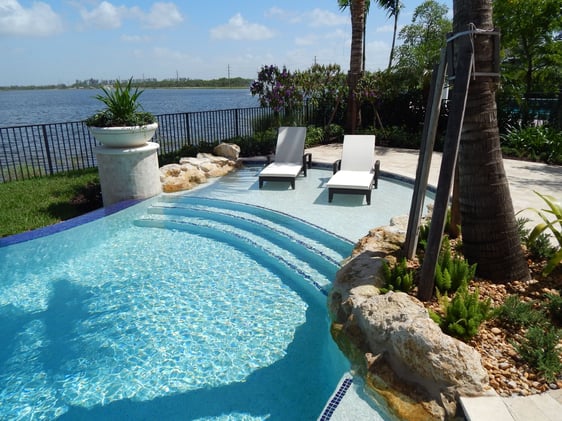
State law sets the floor, but counties in South Florida often add their own requirements. Here's what homeowners in the region should know:
Broward County: Residential pools cannot be directly accessible from the home without a compliant fence or barrier of a specified height separating the pool from the home's structure.
Because local ordinances are updated periodically, working with a pool builder who actively pulls permits in your specific county is one of the best ways to ensure your project meets all current requirements from day one.
What Are the Pool Regulations on Florida's Treasure Coast?
The Treasure Coast counties extend state requirements in some meaningful ways:
Martin County: Backwash from pool filters must be disposed of through the sanitary sewer system or another approved disposal method — not discharged into the stormwater system. This is an environmental protection measure reflecting the region's commitment to its waterways.
St. Lucie County: Pool filters must be manually cleaned at least once per week, and pools must be refilled from the bottom to prevent splash-out and uneven water temperatures.
These rules reflect both safety priorities and the environmental sensitivity of Treasure Coast communities. Homeowners relocating to the region are often surprised by these specifics — another reason local expertise in a builder genuinely matters.
What Happens If You Don't Comply with Florida's Pool Laws?
Let's just say the consequences are not worth it. Non-compliance carries real legal, financial, and personal risk:
Criminal exposure: Failing to equip a new pool with at least one required safety feature is a second-degree misdemeanor under Florida Statute 515. You have 45 days to correct it and attend a state-approved drowning prevention course to avoid prosecution.
Fines and forced closures: Local building departments can levy fines, require safety retrofits, or in serious cases, order a pool to be closed or removed until it meets code.
Liability in accidents: In the event of a drowning or near-drowning, courts consider whether the property owner was compliant with applicable safety laws when determining liability. Non-compliance can significantly affect the outcome of a premises liability claim
Insurance implications: Some homeowners' insurance policies may deny claims or reduce coverage if a pool is found to be non-compliant at the time of an incident.
The cost of getting compliant is almost always far lower than the cost of not being compliant — financially, legally, and in every way that actually matters.
What About Older Pools Do They Need to Be Upgraded?
If your pool predates the year 2000, it may not meet today's standards and that matters even if you're not doing anything new. Here's when upgrades may be required or recommended:
- Pools built before the 2000 Residential Swimming Pool Safety Act may not have the required safety features at all
- Pools where fence or barrier systems have deteriorated or been removed over time
- Gate hardware that no longer self-closes or self-latches properly — this is more common than you'd think in Florida's heat and humidity
- Properties that have been sold or transferred — Florida law requires that pool contractors and home contractors building a new home for a buyer provide documentation on drowning prevention responsibilities
Important: Pools built before October 1, 2000, are not automatically exempt if they've been modified or if the property has changed hands. Check with your county.
If you've purchased a home with an existing pool and you're not sure where it stands on compliance, a professional pool inspection is the fastest way to find out. Learn more about swimming pool inspections.
Staying Compliant Over Time
Think of pool compliance less like a checkbox and more like pool maintenance it's ongoing. Here's what to keep an eye on:
- Regularly check that gates are self-closing and self-latching, with hardware intact and not corroded
- Inspect fences and barriers for gaps, damage, or anything that's shifted over time
- Test alarm systems monthly and replace batteries as needed
- Stay informed about changes to local ordinances that may affect your property
- Schedule an inspection any time you renovate, remodel, or purchase a home with an existing pool
The good news: staying on top of this doesn't take much. A few checks per season goes a long way.
How Fountain Blue Pools Helps You Stay Compliant from Day One
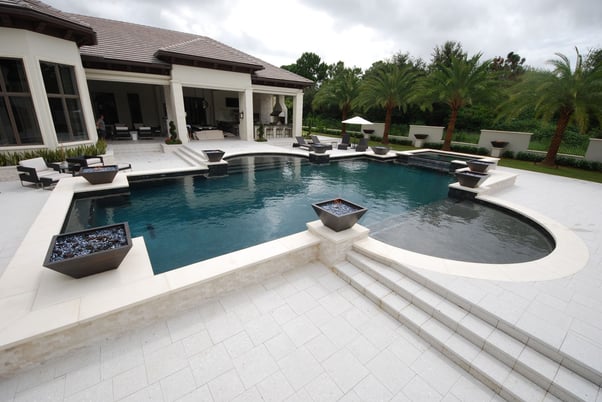
Fountain Blue Pools has been building residential and commercial pools in South Florida and the Treasure Coast for more than 34 years. Every project is built with full awareness of current state law, county-specific requirements, and what it takes to pass inspection from permitting through final certificate of completion.
For homeowners with existing pools, Fountain Blue's inspection and service teams can assess current safety features, identify any compliance gaps, and advise on specific upgrades needed to meet today's standards.
Whether you're planning a new build, renovating an older pool, or simply want to know where your current pool stands, contact Fountain Blue Pools to schedule a consultation. We'll make sure your backyard is not only beautiful — but built to keep everyone in it safe.

No Comments Yet
Let us know what you think